Is Your Production Line Down? An Expert's Guide to Repair
Your Production Line Has Stopped. Your Time and Money Are Leaking Away.
Hello. My name is Wang Jin-ho, and I'm the Technical Director at 'Modu-Machine.' You can think of me as a technical house-call doctor for factories, primarily serving the Seongnam industrial area but available for plants all across Korea. My journey began with a deep dive into the principles of electrical engineering at Ansan University, which I later paired with a degree in franchise management. This dual perspective has been my secret weapon, allowing me to see both the intricate workings of a machine and the critical numbers on a business owner's ledger. With 25 years of hands-on experience, including 18 years specializing in highly regulated GMP (Good Manufacturing Practice) facilities, I've learned a harsh but vital lesson: the smallest tremor in a machine can cause a catastrophic earthquake in your production numbers.
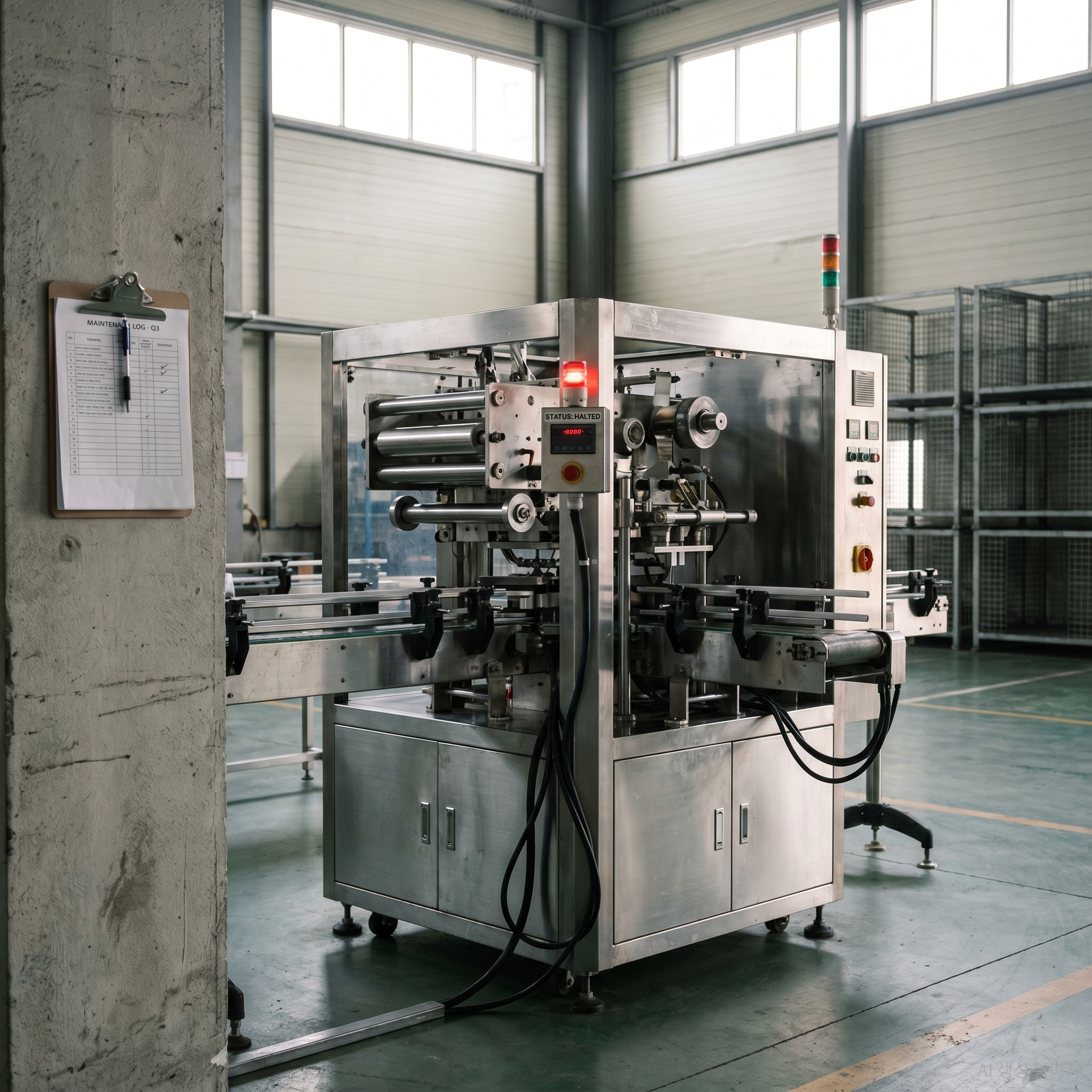
I know that feeling of sheer panic when a critical piece of used equipment, like a four-sided sealing machine, suddenly grinds to a halt. Your mind immediately races to the worst-case scenario. But making a rushed decision to replace it can often lead to an even greater financial loss. This is why I've built my entire career on a diagnosis-first approach. I don't just treat the 'symptom' you can see; I hunt for the 'root cause' buried deep within your system. This philosophy is more than just a repair strategy; it's a 'technical shield' designed to protect your most valuable assets. It's the core of what it means to be an Equipment Assessment Specialist.
Diagnosis Is Cost Savings. The Factory Floor Proves It.
Talk is cheap. Results are what matter. Let me share a few recent stories from the field where my diagnostic approach saved factory owners from significant, unnecessary expenses. The solution to your current headache might be hidden in one of these examples.
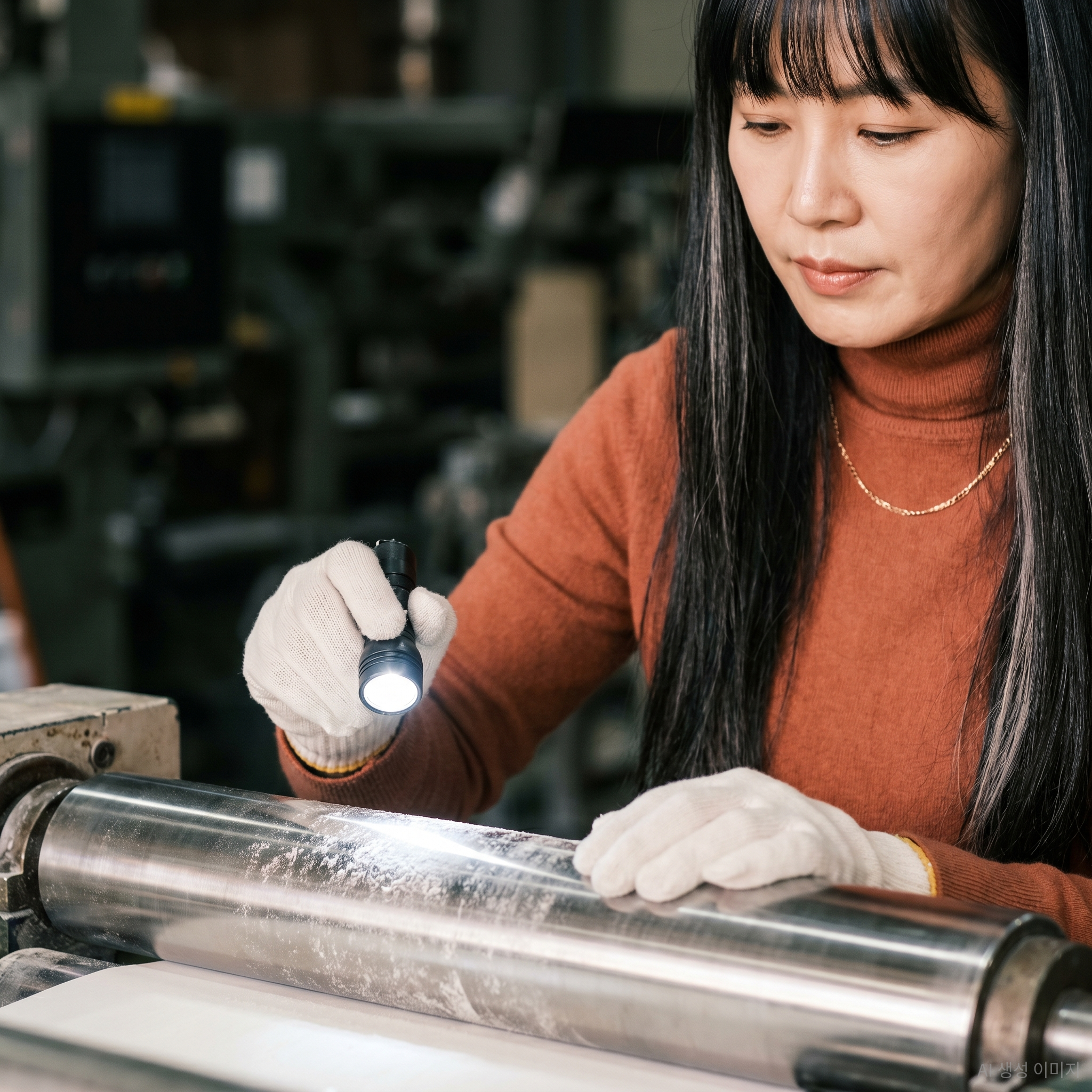
Our first case takes us to a pharmaceutical company in Gwangju. They were operating a vertical form-fill-seal (VFFS) machine for packaging powders into small pouches, and their defect rate was skyrocketing because the pouch lengths were wildly inconsistent. The previous repair service had already taken a look. Their diagnosis? The expensive servo motor or the main controller was aging and needed a full replacement. They had already drawn up a hefty quote. However, when I arrived, I started with the basics. I meticulously inspected the entire film path. The issue wasn't in the high-tech electronics. The real culprit was a nearly invisible layer of fine powder that had caked onto the surface of the main drive roller—the one that pulls the packaging film. This microscopic layer was causing the film to slip just enough to throw off the measurements. Instead of a multi-thousand-dollar overhaul, the solution was a specialized cleaning procedure and a careful recalibration of the film tension. We saved them a fortune and had the line running perfectly in hours.
The second story comes from a food factory in Eumseong that produces liquid sauces. Their filling machine was dispensing inconsistent amounts, a critical problem that was about to lead to customer complaints and potentially even a product recall. The owner was convinced the machine’s old piston cylinder assembly needed a complete, and very expensive, replacement. When I got there, I didn't start at the filling machine itself. Instead, I began tracing the compressed air lines that snaked across the entire factory. My experience has taught me to look at the whole system, not just the point of failure. Sure enough, halfway between the main compressor and the machine, I found it: a single, corroded pressure regulator that was causing erratic fluctuations in the air supply to the filler. A part that cost less than a good dinner was about to cause a five-figure problem. This holistic, big-picture view is the very essence of my Outsourced Engineering System.
My final example involves a metal detector on a conveyor line. It kept triggering alarms and stopping the line, even when there were no products passing through. These 'ghost' signals were killing their productivity. Phantom detections like this are almost always an electrical noise issue. My primary suspect was ground loop interference. After a few tests, I confirmed that electrical noise from a recently installed inverter drive was bleeding into the metal detector's sensitive circuits. The fix didn't involve replacing the detector, which would have been incredibly costly. Instead, we reinforced the electrical grounding for the system and replaced a key section of wiring with properly shielded cable. Problem solved. A massive capital expense was avoided through a fundamental understanding of industrial electronics.
Systematic Management: The Promise of Our Outsourced Engineering System
I don't believe in one-off repairs. My goal is to become your long-term technical partner, ensuring your equipment stays in peak condition through a systematic program I call the Outsourced Engineering System. Think of me not as a firefighter who rushes in after a disaster, but as a system architect who designs your factory to prevent fires from ever starting. In today's competitive landscape, this commitment to `preventive maintenance` is more critical than ever.
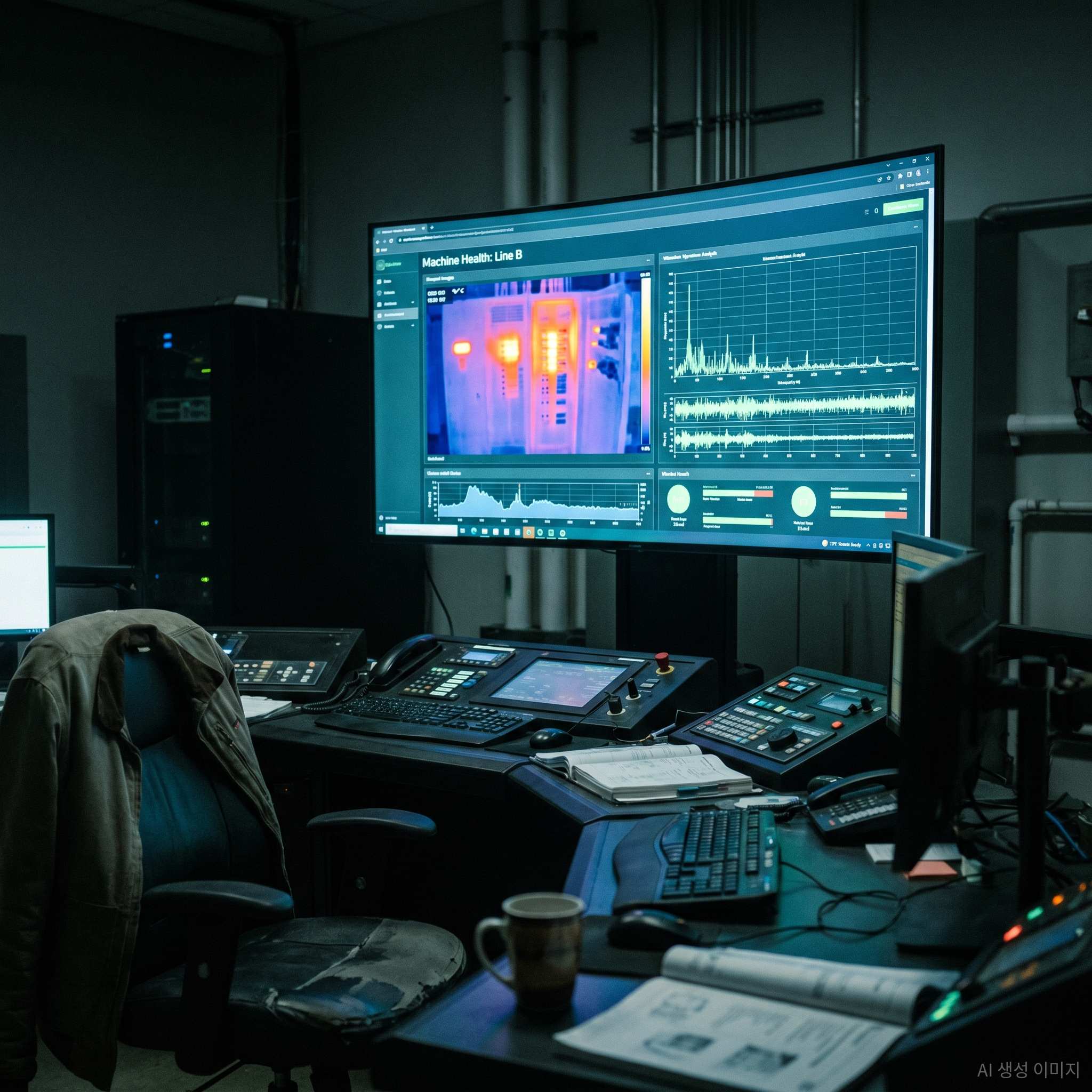
During our scheduled visits, we perform data-driven diagnostics using advanced equipment. This allows us to identify potential issues long before they can cause a catastrophic failure, preventing unexpected downtime. My role is to take the entire burden of equipment management off your shoulders, so you can focus 100% of your energy on what you do best: production and growth.
━━━━━━━━━━━━━━━━
━━━━━━━━━━━━━━━━
The Core Process of a Modu-Machine Diagnostic Visit:Vibration Spectrum Analysis: We use sensors to listen to the unique vibrational signature of your motors and bearings. This is like an EKG for your machinery, allowing us to detect the earliest signs of wear and tear, months before a failure.Thermal Imaging Scans: We scan your control panels and high-load electrical terminals with a `thermal imaging` camera. Heat is the first sign of electrical resistance and a clear warning of a potential fire hazard or component failure.Pneumatic/Hydraulic System Audits: We check your air and fluid systems for pressure stability and microscopic leaks. These tiny leaks are silent killers of efficiency, driving up your energy bills and compromising machine performance.PLC Error Log Analysis: We plug directly into your machine's brain—the Programmable Logic Controller (PLC)—and analyze its error logs. This digital diary tells us about intermittent sensor faults and other hidden issues that may not be obvious during normal operation. We then recalibrate sensors to ensure they are performing optimally.
A No-Nonsense Q&A for Factory Owners
Here are clear, straightforward answers to the three questions I hear most often from business owners on the factory floor.
Q1. Is buying used equipment always a risky, short-term solution?
A: Absolutely not. The most important factor isn't the 'age' of the machine, but its 'maintenance history.' A brand-new piece of equipment that is neglected can fail at any time. Conversely, an older machine that has been professionally and periodically maintained can perform just as reliably as a new one, often for a fraction of the cost. My role as an Equipment Assessment Specialist is to provide that consistent, professional maintenance history that turns a used machine into a reliable asset.
Q2. When I get a repair quote, what is the most important thing to look for?
A: Don't just look at the total price. Demand a 'detailed explanation of the diagnostic process.' A true expert won't just say, 'This part is broken, so it needs to be replaced.' They should be able to explain logically, 'Here is the testing I performed to rule out other possibilities, and this is the data that proves this specific part is the root cause of the failure.' Be wary of any technician who immediately recommends an expensive part replacement without providing a clear, evidence-based justification.
Q3. I'm overwhelmed by the idea of factory automation. Where do I even begin?
A: Don't think about a massive, factory-wide overhaul. The smartest way to start is by identifying the single biggest point of inefficiency in your current process and applying a targeted, simple solution. For instance, instead of a complex robotic system, maybe you can introduce a simple collaborative robot (a 'cobot') to handle a repetitive packaging task. Or perhaps you can install a few modern sensors on an older machine to start collecting production data. My specialty is consulting on this kind of 'cost-effective' automation, helping you find the projects that deliver the maximum return on the minimum investment.
My mission is to do more than just fix machines. It's to become a steadfast technical partner who helps your business thrive. With 25 years of experience, I promise to provide the most efficient and economical solutions for your factory.
So, let me close with one final question for you. Is your valuable equipment still stuck in a reactive cycle of 'repair after failure,' or is it ready to move forward into a proactive state of 'diagnosis before failure'?
#industrial #maintenance #factory #automation #machine #troubleshooting #preventive #maintenance #manufacturing #efficiency #equipment #repair #production #line
📚 Want more perspectives on this topic? Browse related articles — curated by Google Search for authoritative external sources.


댓글
댓글 쓰기