Preventive Factory Maintenance: Stop Fixing, Start Preventing
Hello, I'm Jin-ho Wang, here to diagnose your factory's future.
As the Technical Director of 'Modu Machine,' based in Seongnam, I've dedicated my career to safeguarding production floors for business owners across South Korea. Let me ask you a question: have you ever considered that the common mindset of "we'll fix it when it breaks" might be the very thing holding your factory back? The moment a critical piece of machinery grinds to a halt, the damage goes far beyond a simple repair bill. It triggers a cascade of problems: production lines stall, delivery deadlines are missed, and the trust you've worked so hard to build with your clients begins to erode. With 25 years of hands-on experience, including 18 years navigating the demanding world of GMP (Good Manufacturing Practice) standards, I've learned one undeniable truth: the best equipment management isn't about reacting to disasters, it's about proactively preventing them.
My journey began with a strong foundation in electrical engineering from a technical college. However, I knew that to truly serve business owners, I needed to understand their perspective. That's why I also pursued a degree in franchise and food service management from an online university. It was at the intersection of these two disciplines—the technical and the entrepreneurial—that my unique 'Outsourced Maintenance Program' was born. This is more than just a repair service. Think of it as a dedicated 'technology shield' for your factory. It's my commitment to you: a system designed to preemptively diagnose risks, eliminate unnecessary expenses, and ensure your operations never have to stop. This proactive approach is the heart of what I believe a true outsourced factory maintenance partnership should be.
How a Single Misdiagnosis Can Cost Thousands: Real Stories from the Field
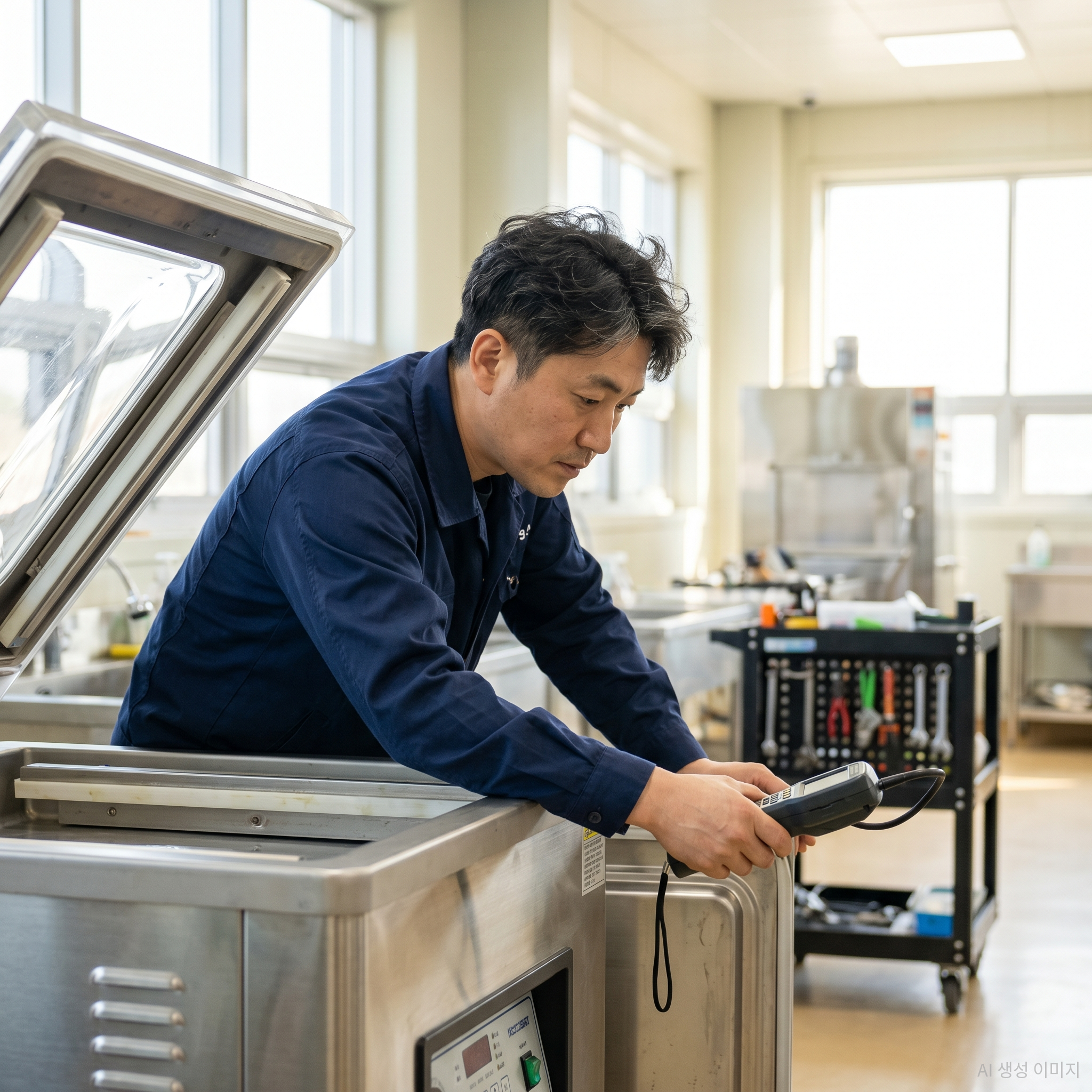
First, let's talk about a case at a food processing plant in Icheon. They were facing a high defect rate with their vacuum packaging machine. When they contacted the original manufacturer, they were told the aging vacuum pump needed a full replacement and were handed a quote for 8 million won (roughly $6,000 USD). That's a significant expense. However, when I arrived on-site, I suspected something else was at play. Using a pressure gauge and a specialized leak detector for a more precise diagnosis, I discovered the real culprit wasn't the pump at all. It was a minuscule tear in a worn-out rubber gasket. A simple part, costing only 200,000 won (about $150), was causing the entire issue. After replacing the gasket and performing a thorough filter cleaning, the machine's performance was fully restored. In this case, an accurate diagnosis saved the company 7.8 million won.
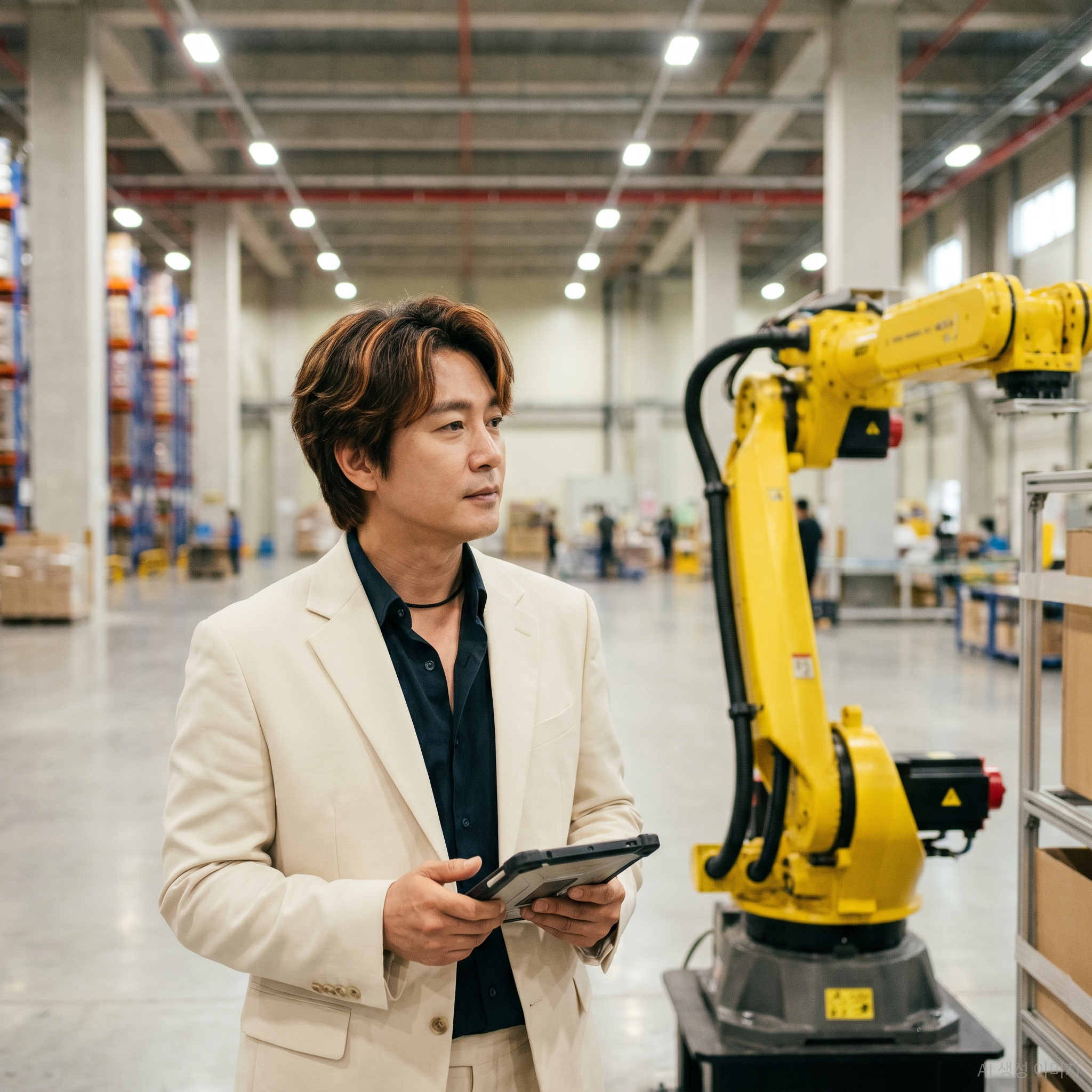
The second story comes from a logistics center in Yongin, where an automated robotic arm was malfunctioning. It kept deviating from its programmed path, frequently bringing the entire line to a screeching halt. The robot's manufacturer recommended a very expensive fix: replacing the servo motor and the encoder. I had a feeling the problem wasn't mechanical. I asked about any recent unusual events and learned the facility had experienced a major power outage the week before. That was the key. My analysis revealed that the sudden loss of power had corrupted the robot's coordinate calibration data, throwing its positioning off by just a few millimeters. The solution wasn't costly hardware; it was a software recalibration and the installation of a power stabilization unit to prevent future surges. This shift in perspective from hardware to environment saved the client tens of thousands of dollars. A true equipment diagnostics expert must see beyond the machine to understand the entire ecosystem it operates in.
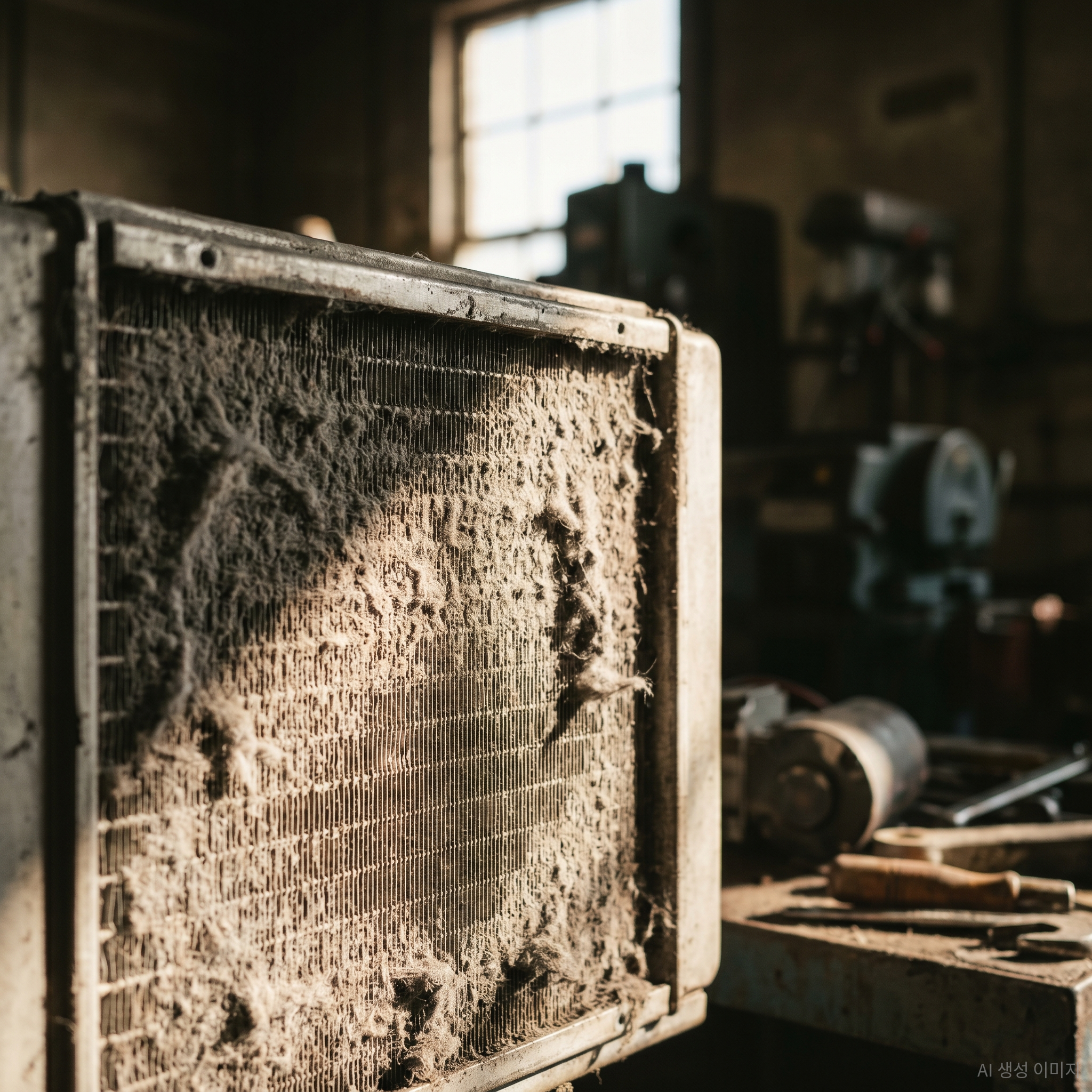
Finally, a story from a manufacturer right here in my local area of Seongnam. The powerhouse of their entire operation, a large air compressor, kept overheating and shutting down. They were on the verge of making a massive capital investment in a new, higher-capacity model. Before they did, I came in to assess the situation. I started by analyzing their actual compressed air usage (measured in CFM) over a full production cycle. The data was clear: their current compressor was more than powerful enough. The real issue was twofold: the compressor room had extremely poor ventilation, and the unit's radiator was almost completely clogged with years of accumulated dust. It was essentially suffocating. We redesigned the ducting to improve airflow and performed a deep cleaning of the radiator. The overheating problem vanished. This is a perfect example of how proper 'Seongnam factory repair'—or effective repair anywhere in the world—begins by preventing unnecessary and costly investments.
Factory Management in 2026: Data-Driven Energy Savings
This year, buzzwords like 'Smart Factory' and 'AI Predictive Maintenance' are everywhere. While these advanced technologies hold incredible promise, jumping straight to a complex, expensive system is like trying to run a marathon without any training. There is a fundamental first step that every factory owner should master: the simple habit of recording and analyzing your own facility's data. Seemingly minor details—subtle changes in a machine's operating temperature, new vibration patterns, daily energy consumption logs—are the building blocks of true operational intelligence. It's only when you consistently gather this data that you can begin to accurately predict potential failures and identify hidden inefficiencies. My 'Outsourced Maintenance Program' is built on this very principle. During every scheduled visit, we systematically record and analyze these key data points, presenting you with a clear, actionable report. This is the most practical and powerful first step you can take on the journey toward future factory automation.
Have you compared the energy consumption data for each major piece of equipment over the last three months?Are you actively identifying and logging which machines are making unusual noises or exhibiting new vibrations?Are you strictly adhering to the manufacturer's recommended schedule for crucial preventative tasks like lubrication and filter changes on your core equipment?
━━━━━━━━━━━━━━━━
━━━━━━━━━━━━━━━━
Common Questions I Hear on the Factory Floor (And My Honest Answers)
Q1. My equipment is old. How do I know when it’s the right time to replace it?
A. This is a critical question. My philosophy is that a machine's 'operational health' and 'efficiency' are far more important indicators than its calendar age. I don't rely on guesswork. I provide what I call a 'Replacement Break-Even Analysis.' This is a data-driven report that considers the equipment's complete repair history, the frequency and cost of breakdowns over the past year, and, most importantly, a direct comparison of its energy efficiency against a modern replacement. The goal is to pinpoint the exact moment when the cost of maintaining the old machine surpasses the benefit of investing in a new one. It’s about replacing a gut feeling with a sound financial strategy.
Q2. Won't an outsourced maintenance program just add to my costs?
A. I completely understand that perspective. In the short term, it can look like an added expense. However, you need to consider the hidden costs you are likely already paying. The cost of lost revenue from unexpected downtime. The cost of premium charges for emergency repairs and rush-shipped parts. The cost of a catastrophic failure that could have been prevented with simple, routine maintenance. When you factor in the financial disasters that are avoided, a proactive maintenance program becomes one of the most cost-effective investments you can make. It's no different than a personal health check-up; the goal is to prevent the major illness that can be debilitating.
Q3. We're a small factory and can't afford a full-time specialist. Is this service for us?
A. Absolutely. In fact, my 'Outsourced Maintenance Program' was specifically created for small and medium-sized businesses that face this exact challenge. Hiring a dedicated, experienced maintenance engineer is a luxury many smaller operations can't afford. My program gives you access to that high-level expertise without the overhead of a full-time employee. It allows you to focus on what you do best—managing production, innovating your products, and serving your customers—while I handle the complex and critical task of keeping your equipment in peak condition.
Your machines may not speak with words, but they are constantly sending signals about their health and performance. My mission is to interpret those signals—the subtle vibrations, the slight temperature changes, the shifts in energy use—and to act on them before they become critical alarms. So, I'll ask you one final question: What is your equipment telling you today? Is it whispering warnings of an impending failure, or is it humming with the promise of a productive, profitable future?
If you need a steadfast technology shield to ensure your factory never stops, please don't hesitate to contact me, Jin-ho Wang of 'Modu Machine'.
#factory #maintenance #industrial #repair #preventive #maintenance #outsourced #maintenance #cost #reduction #equipment #diagnosis #smart #factory #energy #efficiency


댓글
댓글 쓰기