Stop Costly Factory Repairs: A Technician's Guide
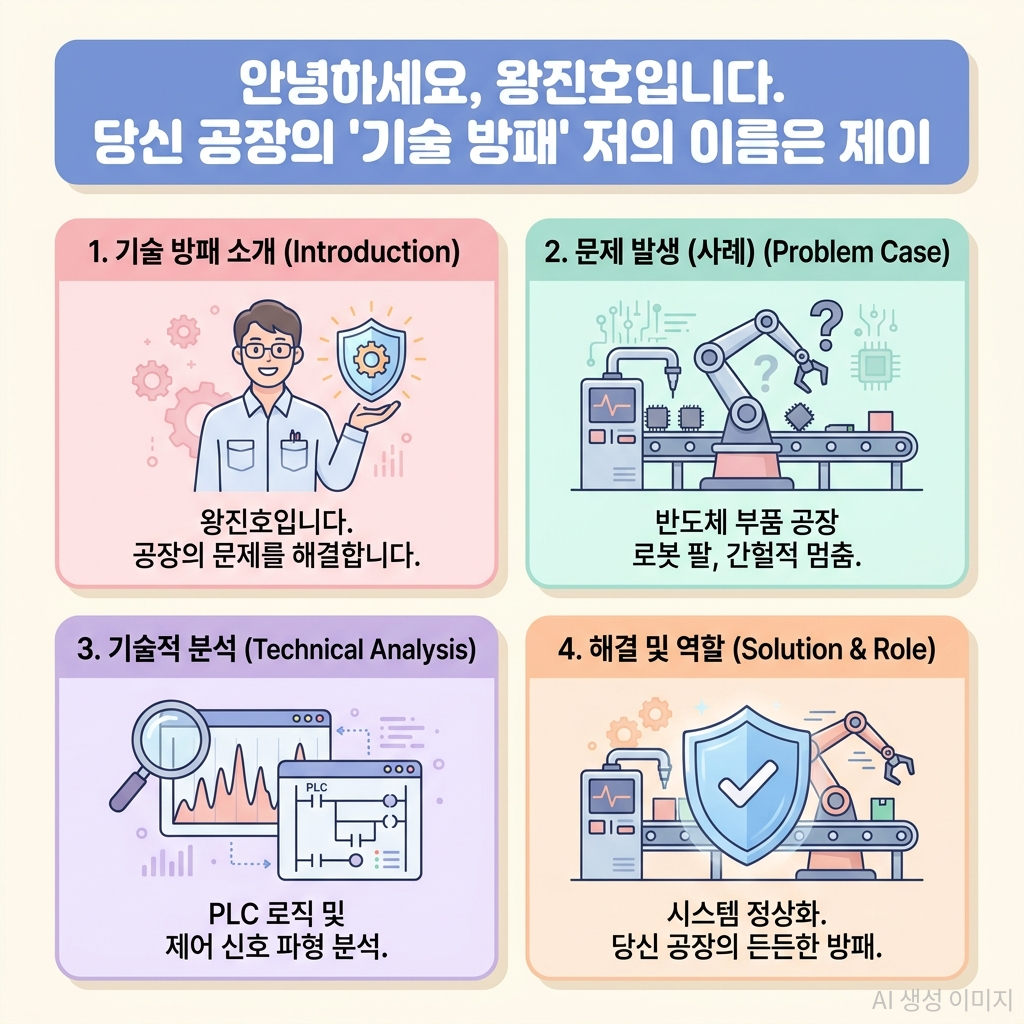
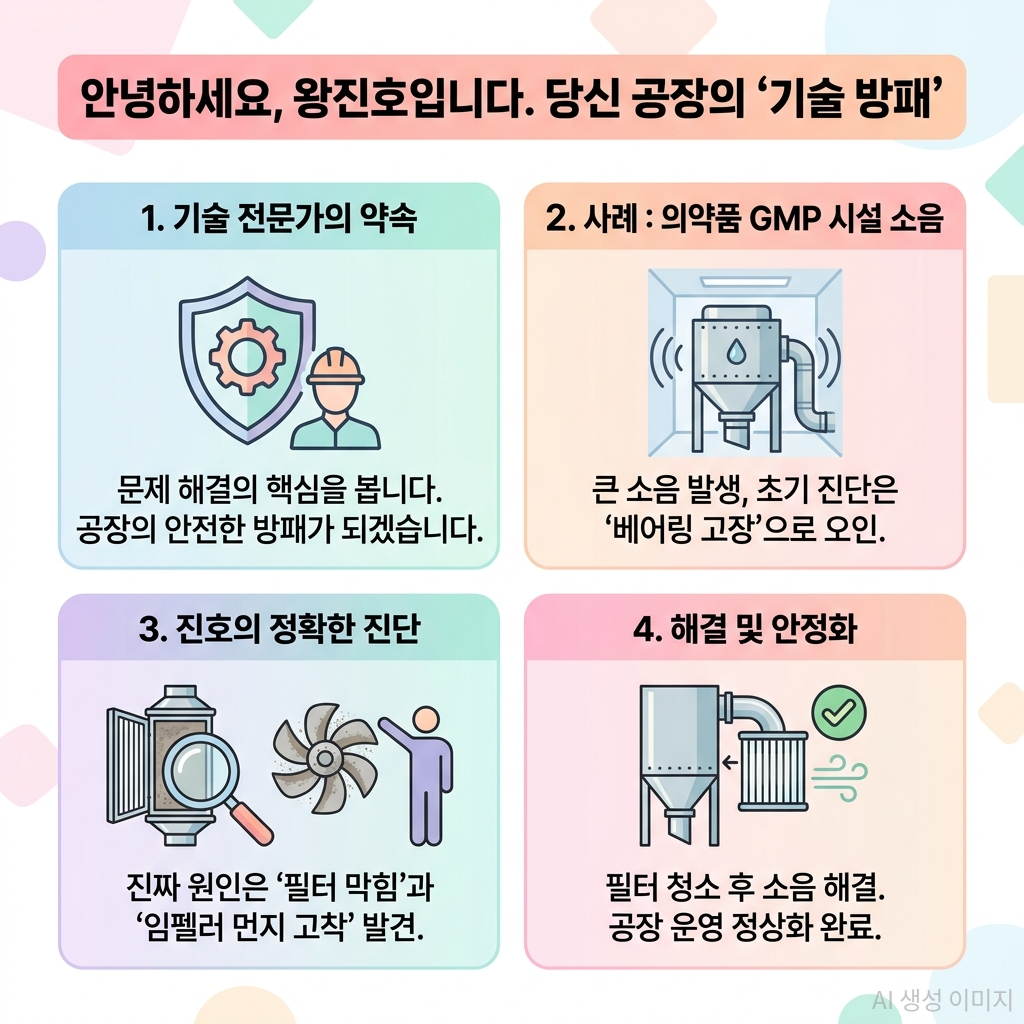
Hello, I'm Jinho Wang, Your Factory's 'Technical Shield'
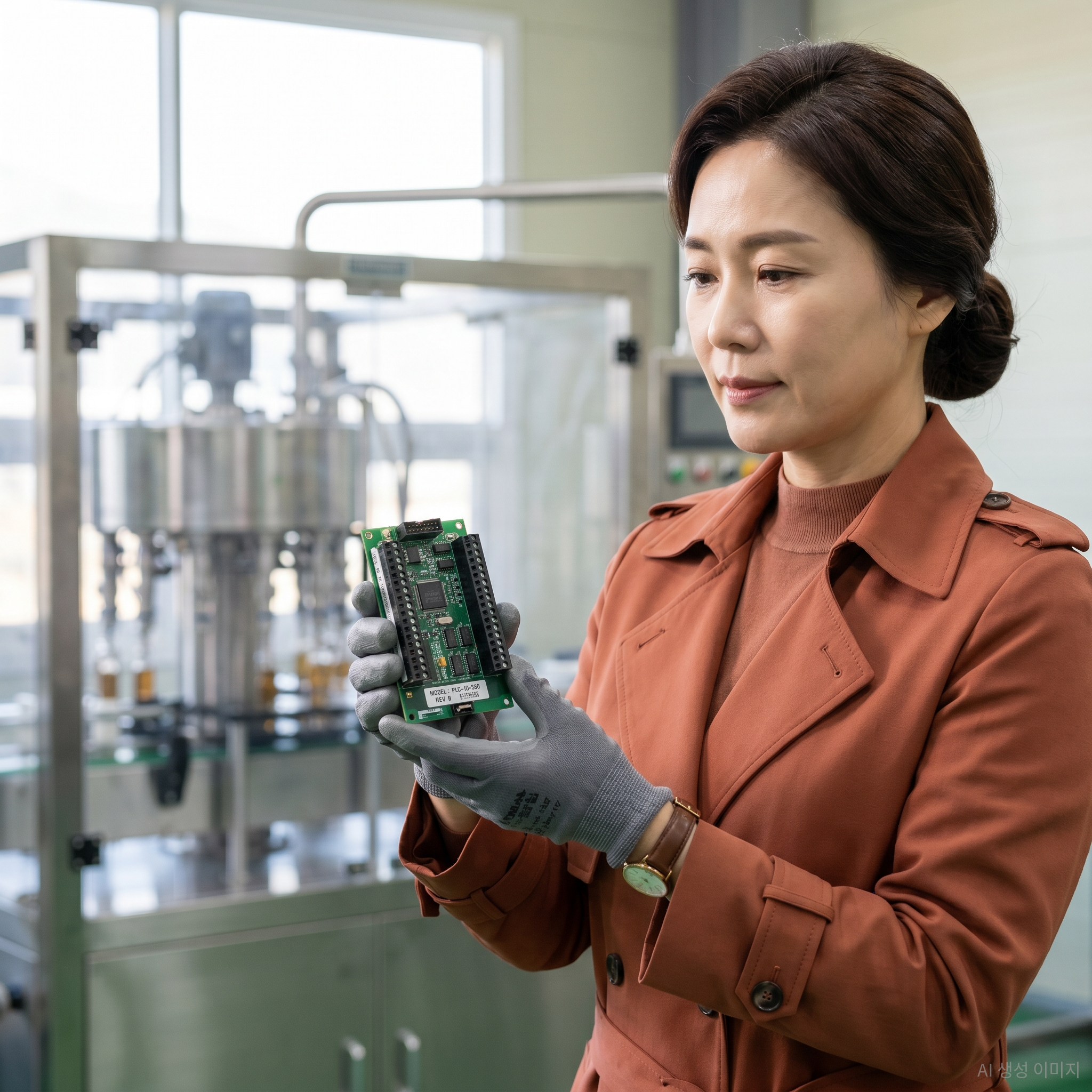
My name is Jinho Wang, and I'm the Technical Director at 'Modu's Machine' located in Seongnam, Korea. My mission is to serve as a 'technical shield' for business owners, protecting their most valuable assets. Not long ago, I received an urgent call from a factory manager. His production line's filling machine had ground to a halt, and every repair service he called gave him the same frustrating advice without any real explanation: replace the entire unit for a staggering 20 million won (about $15,000 USD). When I arrived on-site and performed a thorough diagnostic, the culprit turned out to be a single, aging PLC input/output card. An 800,000 won (about $600) part replacement had the line up and running perfectly. I'll never forget the look of pure relief on that manager's face.
I’ve spent 25 years on factory floors across the country, and I've seen this exact scenario play out countless times. My approach combines a degree in Electrical Engineering from Ansan College of Technology with a strategic business perspective from my studies at Sejong Cyber University. This unique combination allows me to be more than just a repairman; I consider myself an 'Equipment Assessment Specialist' whose primary job is to protect your investment. The 'Comprehensive Outsourced Maintenance Program' we offer isn't a temporary patch. It's a foundational solution designed to systematically manage the health of your entire facility's equipment for the long term.
Replacement Without Diagnosis Is Like Pouring Water into a Leaky Bucket
Replacing parts or entire machines without a precise diagnosis of the root cause is like taking painkillers for a serious illness without knowing the diagnosis. You might feel better for a short while, but the underlying problem will always return, often in a more severe and costly form. In the highly interconnected factory environments of 2026, this is more critical than ever. A failure in one component can easily trigger a cascade of issues in related systems. This is why the diagnostic process—digging deep to uncover the absolute root of the problem—is the most crucial step you can take.
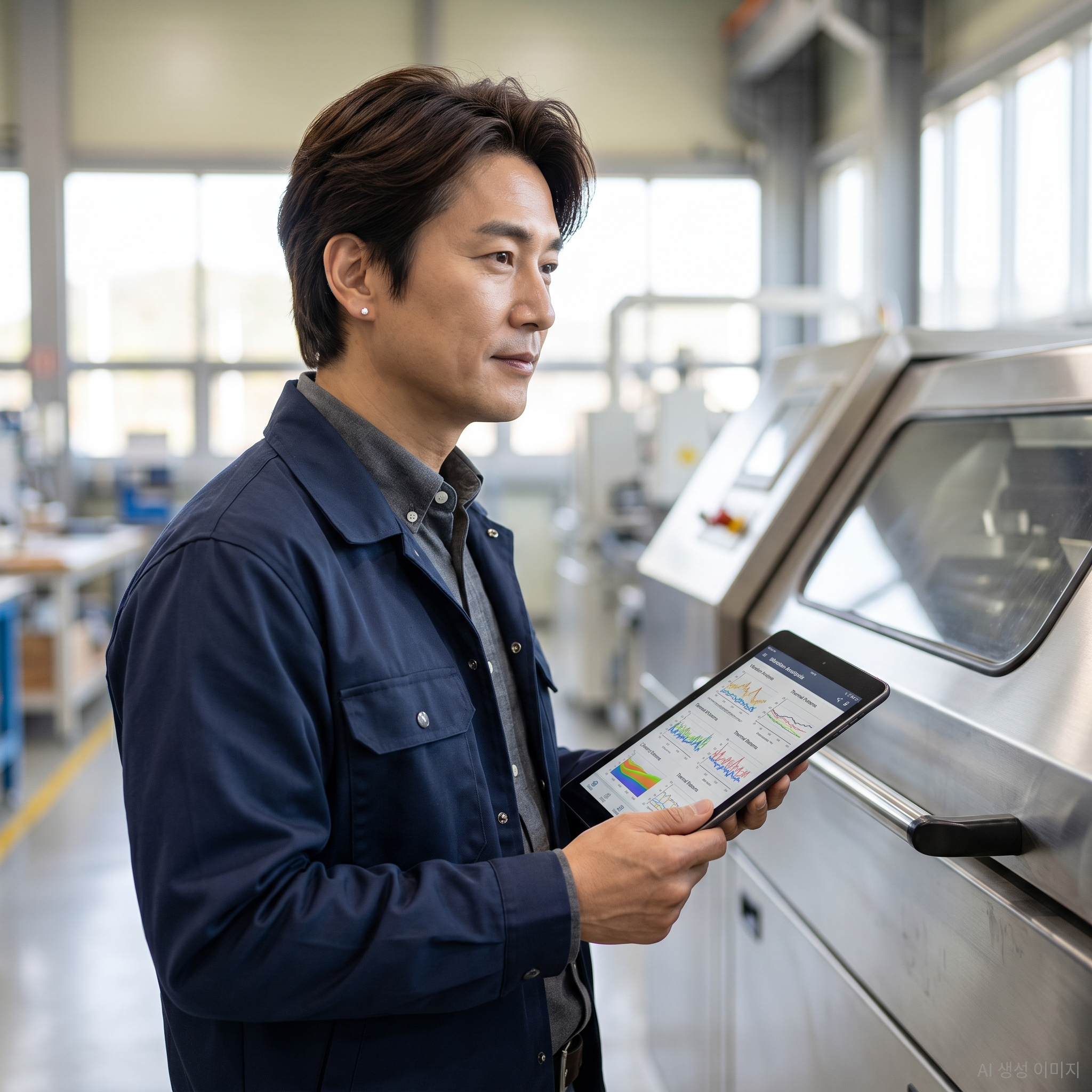
This is where our 'Comprehensive Outsourced Maintenance Program' stands apart from typical repair contracts. Through regular, scheduled visits, we meticulously log and analyze your equipment’s operational data, from vibration signatures to thermal patterns. This forms the basis of what the industry calls 'predictive maintenance'—using data to forecast potential failures before they bring your operations to a standstill. It’s also the first essential step on the path to building a 'smart factory'. Systematic diagnosis and proactive management aren't just expenses; they are the smartest investment you can make to prevent unnecessary replacement costs and significantly extend the life of your equipment.
Field Notes: How We Prevented Thousands in Unnecessary Spending
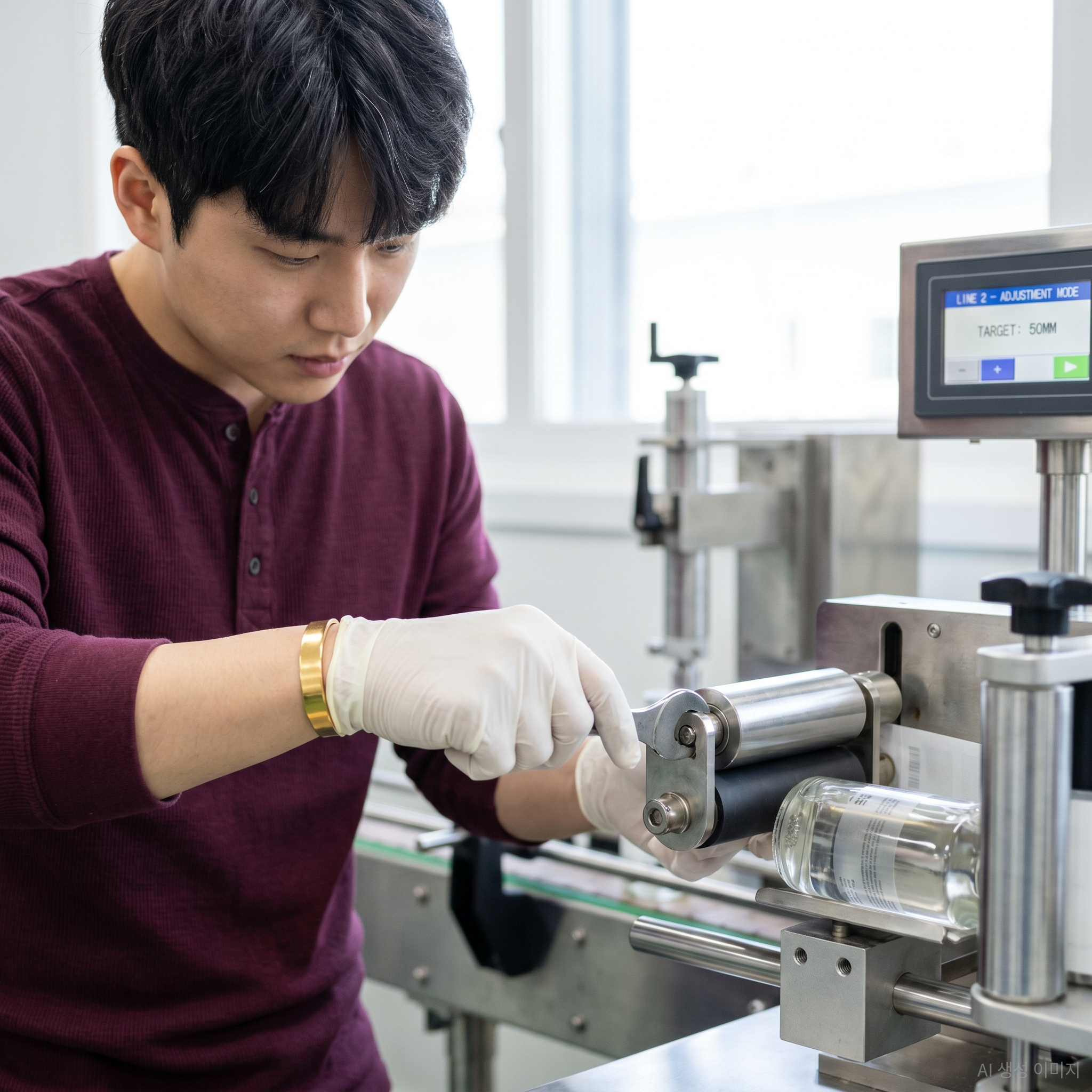
Real-world examples often speak louder than theory, so let me share a few stories from the field. First, there was a cosmetics factory in Paju dealing with an automatic labeler that was constantly applying labels crookedly. The manufacturer’s official recommendation was to replace the entire application head, a repair quoted at 8 million won (roughly $6,000 USD). However, my analysis revealed a minuscule speed variation in the conveyor belt and a slight imbalance in the roller tension. With a few precision adjustments—no new parts required—the problem was completely resolved. This is the kind of solution that’s only possible when you view the entire production line as a single, interconnected system.
Another case involved a factory producing semiconductor components, where a robotic arm on the automation line would freeze intermittently, causing major delays. Instead of just focusing on the robot itself, I analyzed the PLC logic in conjunction with the control signal waveforms. The data showed that electrical 'noise' from the main power line was interfering with the servo driver. Rather than replacing the multi-thousand-dollar driver, we installed a simple noise filter and reinforced the equipment's grounding. Lastly, at a pharmaceutical GMP facility, a deafening noise from a large dust collector was immediately blamed on a faulty bearing. The real culprit? The filter hadn't been cleaned, causing dust to cake onto the impeller, throwing the entire assembly off balance and creating the noise.
The Top Three Questions I Hear from Factory Owners
Q1. My equipment is old. When is the right time to replace it?
A. You should always base this decision on 'performance' and 'cost,' not simply the equipment's age. It's time to seriously consider a replacement when recurring repair bills start to approach the machine's residual value, when its declining energy efficiency is costing you a fortune in utility bills, or when its poor output is directly threatening your ability to meet production deadlines. An equipment specialist uses hard data to present you with the most economical and strategic options.Q2. What's the difference between your 'Outsourced Maintenance Program' and having an in-house technician?
A. The two biggest advantages are 'cost-efficiency' and 'breadth of expertise.' A single in-house employee, no matter how talented, will naturally have specialized skills in certain areas. When you partner with our program, you gain access to an entire network of vetted specialists across multiple disciplines—electrical, mechanical, control systems, and more. You get top-tier, specialized technical service exactly when you need it, without the fixed salary, benefits, and overhead of another full-time employee.Q3. My factory isn't in Seongnam. Can you still help?
A. Absolutely. While our home base is in Seongnam (a major industrial city just south of Seoul, Korea), we are fully equipped to serve clients nationwide. We can provide immediate emergency response for 'Seongnam factory repairs', and we support other regions through our extensive professional network. However, the core philosophy of our program is to minimize these emergencies in the first place through proactive, regularly scheduled inspections.
A Question for 2026: Is Your Equipment an Asset or a Liability?
Please take a moment to reflect on your factory's current equipment management with this quick checklist:
In the past 12 months, have you had to call for repairs on the same piece of equipment three or more times for the very same issue?Have you ever been given a quote for a full 'replacement' without receiving a clear, detailed, and data-backed explanation of the root cause of the failure?If you answered 'yes' to either of these questions, it's a strong signal that your current maintenance strategy may need rethinking. Properly managed equipment is a powerful 'asset' that generates revenue and drives growth. Neglected equipment, on the other hand, is a ticking 'liability,' just waiting to explode into a costly operational crisis. Let me, Jinho Wang, be the technical shield that ensures your machinery remains a productive asset for your business.
Who is protecting your valuable factory at this very moment, and how are they doing it? Don't wait until a minor issue becomes a major disaster. Get an expert diagnosis and take control of your facility's future.
#industrial #maintenance #factory #automation #equipment #repair #predictive #maintenance #cost #saving #manufacturing #smart #factory #plant #management


댓글
댓글 쓰기