3-Side Sealer Repair Costs: Are You Being Overcharged?
The Hidden Truth Behind the Numbers on Your Repair Invoice
Hello, I'm Wang Jin-ho, the Technical Director at 'Modu-Machine.' Based in Seongnam, South Korea, my team and I diagnose and solve industrial equipment problems for factories all across the country. Over my 25-year career, with 18 of those years spent in demanding GMP (Good Manufacturing Practice) environments, I've come to realize a sobering truth: a significant portion of what most factory owners pay for repairs is pure waste, inflated by what I call 'guesswork maintenance.' When your three-side sealing machine grinds to a halt, the all-too-common response of 'Let's just swap out the mainboard and see what happens' is the financial equivalent of trying to fill a leaking bucket with water. It's an expensive gamble, not a solution.
My professional journey has been a blend of technology and business. I built my foundational knowledge in electrical engineering at Ansan College of Technology and later studied restaurant franchise management at Sejong Cyber University to better understand the intersection of technical operations and business success. My role isn't just to be the guy who replaces a broken part. I see myself as a 'technical shield' for your business, blocking the unnecessary expenses that drain your valuable capital. I am a 'facility diagnostics expert' who operates based on hard data, not hunches. I know better than anyone that an unexpected breakdown doesn't just cause production delays and financial loss; it takes a heavy toll on the owner's peace of mind.
More Than a Repairman: What is an Outsourced Maintenance Partnership?
The service I provide is something I call an 'Outsourced Maintenance Partnership.' This is fundamentally different from traditional repair services that only show up when something is already broken. My daily routine is structured around ensuring the stable, uninterrupted operation of my clients' factories. My mornings are typically dedicated to 'preventive maintenance.' I make scheduled rounds to our partner factories, conducting regular inspections to identify and address small issues before they can escalate into catastrophic failures. It's about finding the cracks before the dam breaks.
In the afternoons, I shift my focus to responding to urgent repair calls and, just as importantly, providing consulting on improving energy efficiency through equipment data analysis. For instance, by using 'machine diagnostics' techniques to analyze subtle changes in a motor's electrical current or its vibration patterns, we can detect signs of an impending failure long before it actually happens. This systematic, data-driven approach is the only real key to breaking the vicious cycle of sudden breakdowns and the exorbitant repair costs that follow. Our Outsourced Maintenance Partnership isn't just a service; we become a steadfast partner in your factory's success.

How a Single Diagnosis Saved Thousands: Real-World Case Studies
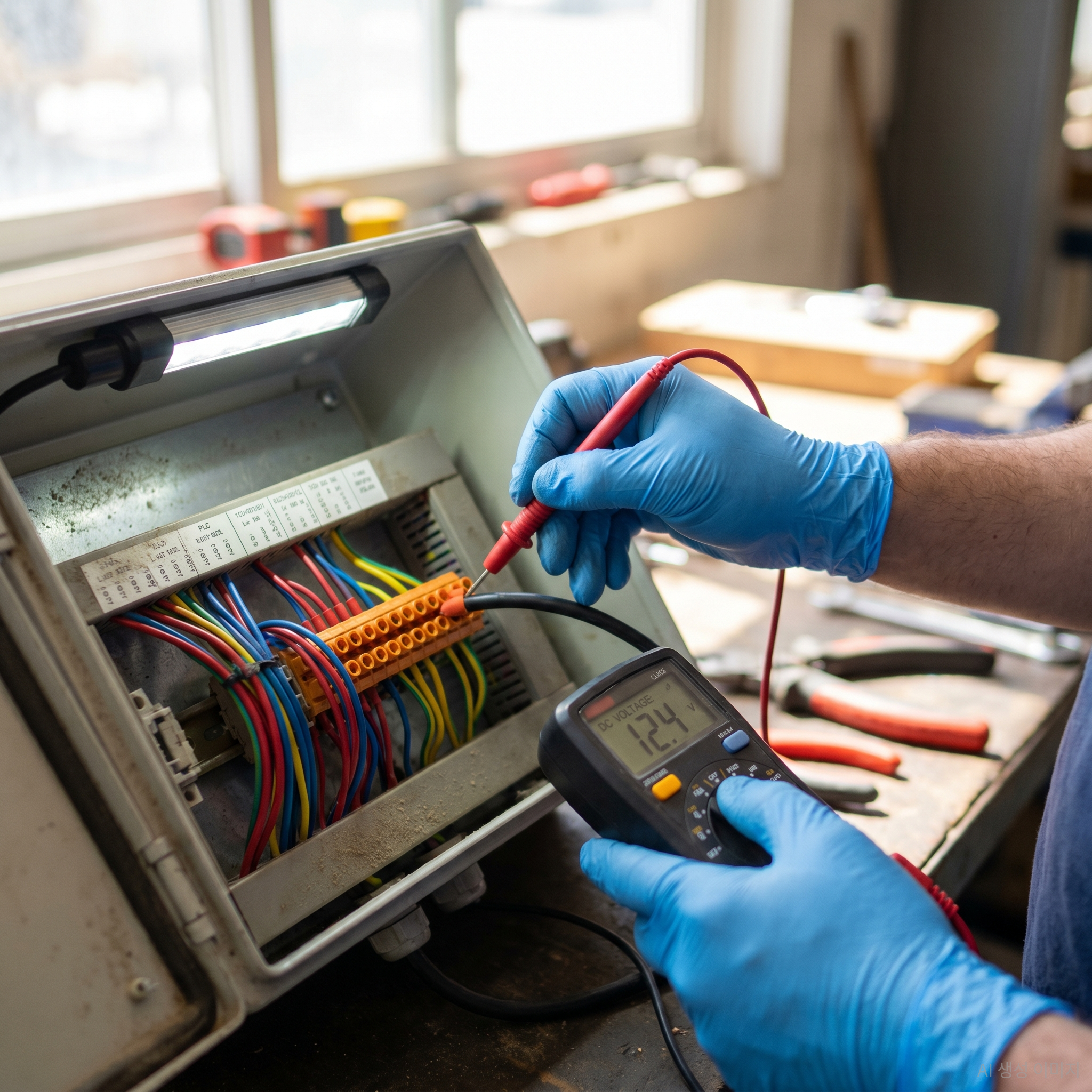
Let me show you how precise diagnostics translate into real savings with a few examples from the field. The first case involves a food factory in Gimpo. Their three-side sealing machine was experiencing a persistent issue where the packaging film would constantly slip out of alignment. They had already received a quote from another repair company for 4.5 million Korean Won (roughly $3,300 USD) to replace the entire PLC controller. After I conducted a thorough two-hour diagnostic, I traced the root cause to minor signal interference from an aging and poorly shielded encoder cable. The solution? We replaced the cable and improved its shielding for a total cost of just 200,000 KRW (about $150 USD). That's the kind of difference an expert eye for diagnostics can make.
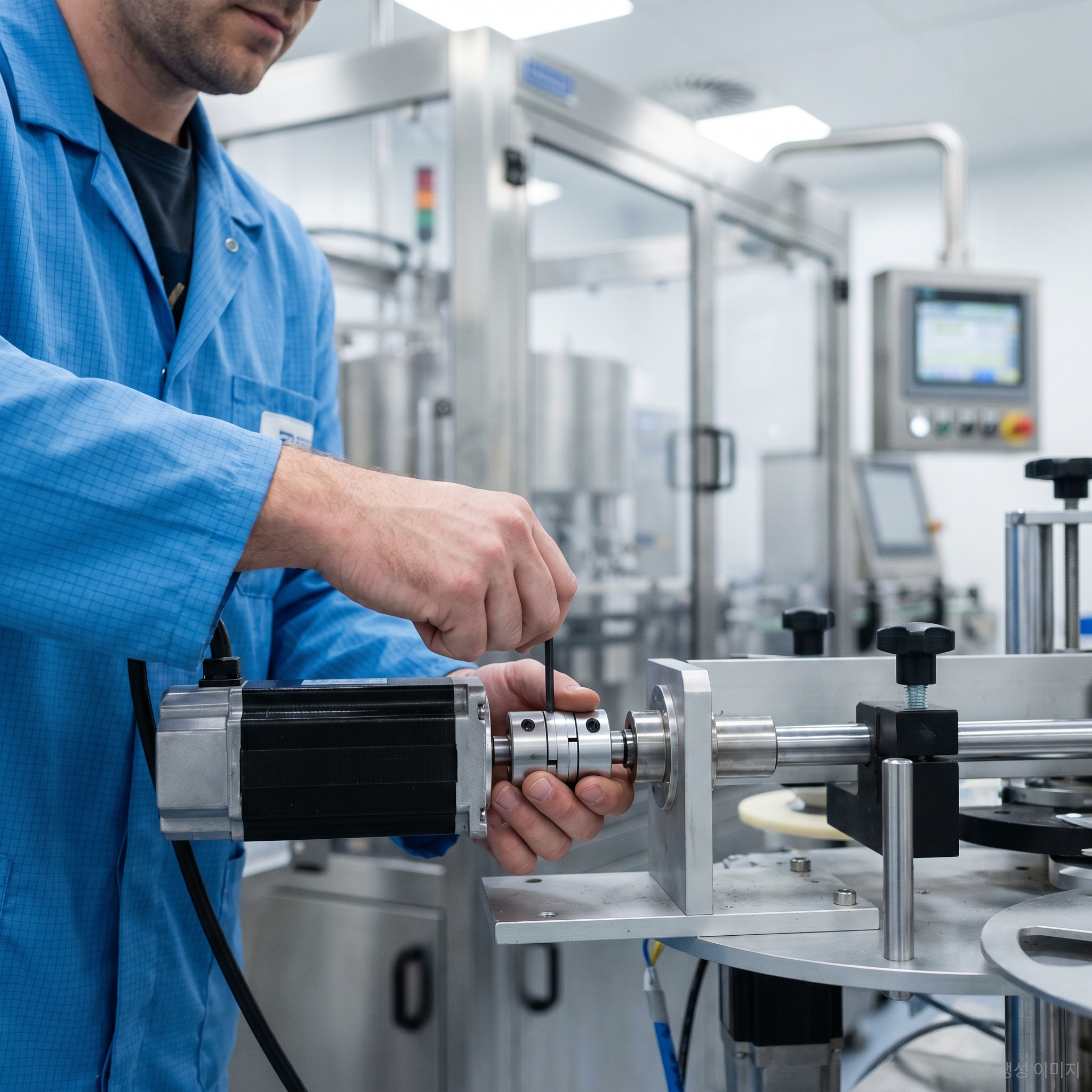
The second story comes from a pharmaceutical company in Eumseong, a city in Chungbuk province. Their labeling machine was malfunctioning, consistently applying labels to the wrong position, which resulted in a high rate of product defects—a critical issue in the pharma industry. The equipment manufacturer insisted that the servo motor needed to be replaced, a repair that would cost over 3 million KRW (around $2,200 USD). However, my inspection revealed the problem wasn't the motor at all. It was a minuscule amount of looseness, or 'play,' in the mechanical coupling that connected the motor to the drive shaft. By simply readjusting and securing the coupling, we completely eliminated the positioning error. No expensive parts needed, just a precise mechanical adjustment.
━━━━━━━━━━━━━━━━
━━━━━━━━━━━━━━━━
Finally, let's look at a cosmetics factory in Seongnam that was having trouble with their capping machine (the machine that tightens bottle caps). The torque it applied was inconsistent, leaving some caps too loose while causing others to spin freely. They were stuck in a frustrating loop of starting and stopping the production line, unable to pinpoint the cause. I identified two culprits: imbalanced pressure in the pneumatic line that powered the capping mechanism and a delayed response from a solenoid valve. A quick replacement of the valve and a recalibration of the air pressure resolved the issue completely. As these cases show, our approach always prioritizes finding the true cause before jumping to costly component replacements.
Q&A for Factory Managers: Your First Step to Smarter Equipment Management
I've compiled some of the most common questions I hear from factory owners and my answers to them.
Q1. Why is keeping a detailed equipment history log so important?
A. Think of an equipment log as a patient's medical record. If you don't have a history of when a part was replaced, what the symptoms were, and why the repair was done, you're forced to approach every new issue as if it's the first time. This leads to wasted time and redundant costs. Every small note you take about a repair, an adjustment, or a strange noise becomes a valuable data point. Over time, this log becomes your factory's unique 'big data,' providing crucial clues that can dramatically speed up future troubleshooting.Q2. Is it really possible for a small or medium-sized factory like mine to reduce energy costs?
A. Absolutely. The easiest and often most impactful place to start is by checking your pneumatic lines for air leaks. These leaks are often silent and invisible, but they force your air compressor to run far more than necessary, wasting a tremendous amount of electricity. A regular, systematic leak detection program can often reduce your monthly electricity bill by 5-10% or even more. It's one of the highest-return maintenance activities you can perform.Q3. What criteria should I use to choose a reliable equipment maintenance partner?
A. I recommend you look for two key things. First, does the technician explain *why* a component failed, supported by engineering principles and data, or do they simply tell you *what* broke? A true expert will educate you on the root cause. Second, do they present you with options? A trustworthy partner will always explore alternatives like repairing or adjusting a part before recommending a full, expensive replacement, and they will always give you, the client, the final say.
Is Your Factory's Health in Good Hands?
Here in 2026, the industry is buzzing with talk of AI and data-driven predictive maintenance. While these technologies are powerful, the most critical foundation of reliable manufacturing remains the same: the skill of an expert on the ground who can accurately diagnose a problem. Machines don't lie; they constantly send out signals about their condition. The problem is that we often fail to read or understand those signals correctly. Is your factory still stuck in the old, reactive mode of 'fixing the barn after the horse has bolted'?
If you're ready to stop the financial bleeding from unnecessary expenses—including inflated three-side sealing machine repair costs—and implement a systematic, proactive management plan for your equipment, then it's time to act. Contact me, Technical Director Wang Jin-ho, today and let's build a stronger, more profitable future for your factory.
📚 Want more perspectives on this topic? Browse related articles — curated by Google Search for authoritative external sources.


댓글
댓글 쓰기