Is Your Factory Machine Noise Costing You a Fortune?
Owner, Is That Machine Noise the Sound of Your Profits Vanishing?
Hello, I'm Jin-ho Wang, Technical Director at 'All-Pro Machinery Solutions.' Based in Seongnam, South Korea, I consider myself the on-call technical doctor for factories nationwide. As a factory owner, you know that heart-stopping feeling. A sudden, unfamiliar 'screech' or 'clunk' echoes across the floor, and instantly, a multi-million-won repair bill flashes in your mind. We've all been there. The service technician comes in, rattles off a list of part numbers and labor costs, and while a voice in your head screams, 'Am I being taken for a ride?' you approve the quote. You can't afford to keep the production line down, so you pay, feeling cornered and frustrated.
This reality—where your entire operation is held hostage by a single equipment supplier—is one of the biggest challenges facing small and medium-sized enterprise owners today. For 25 years, I've been in the trenches, wrestling with every kind of industrial equipment imaginable. I've channeled that hands-on experience and engineering knowledge into becoming a 'technical shield' for owners like you, standing by your side to deflect unnecessary costs and bad advice. This article is more than just a guide to fixing noise from a three-sided sealing machine; it's your first step toward reclaiming technical control over your own factory.
A DIY Guide to Machine Noises: Your First Step to Slashing Repair Costs
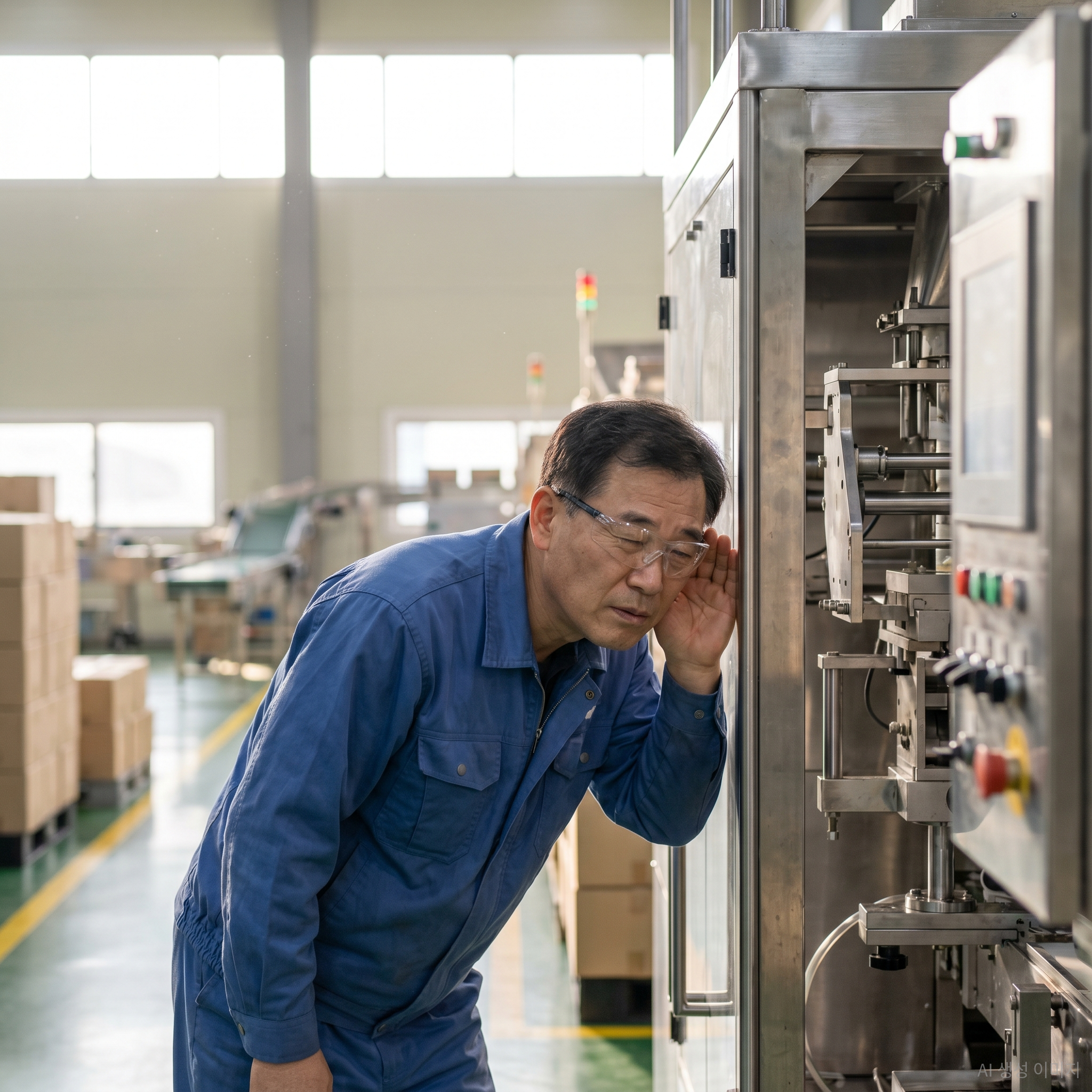
That noise your machine is making isn't just an annoyance; it's the most honest data you can get about its health. It's telling you exactly where it hurts. Before you make that expensive call for a service technician, take out your smartphone, record the sound, and compare it to this checklist. Simply identifying the symptom accurately can prevent over-servicing and cut your potential repair costs by more than half. This initial step provides a crucial clue that allows an expert in equipment diagnostics, like myself, to perform a precise analysis and get to the root of the problem efficiently.
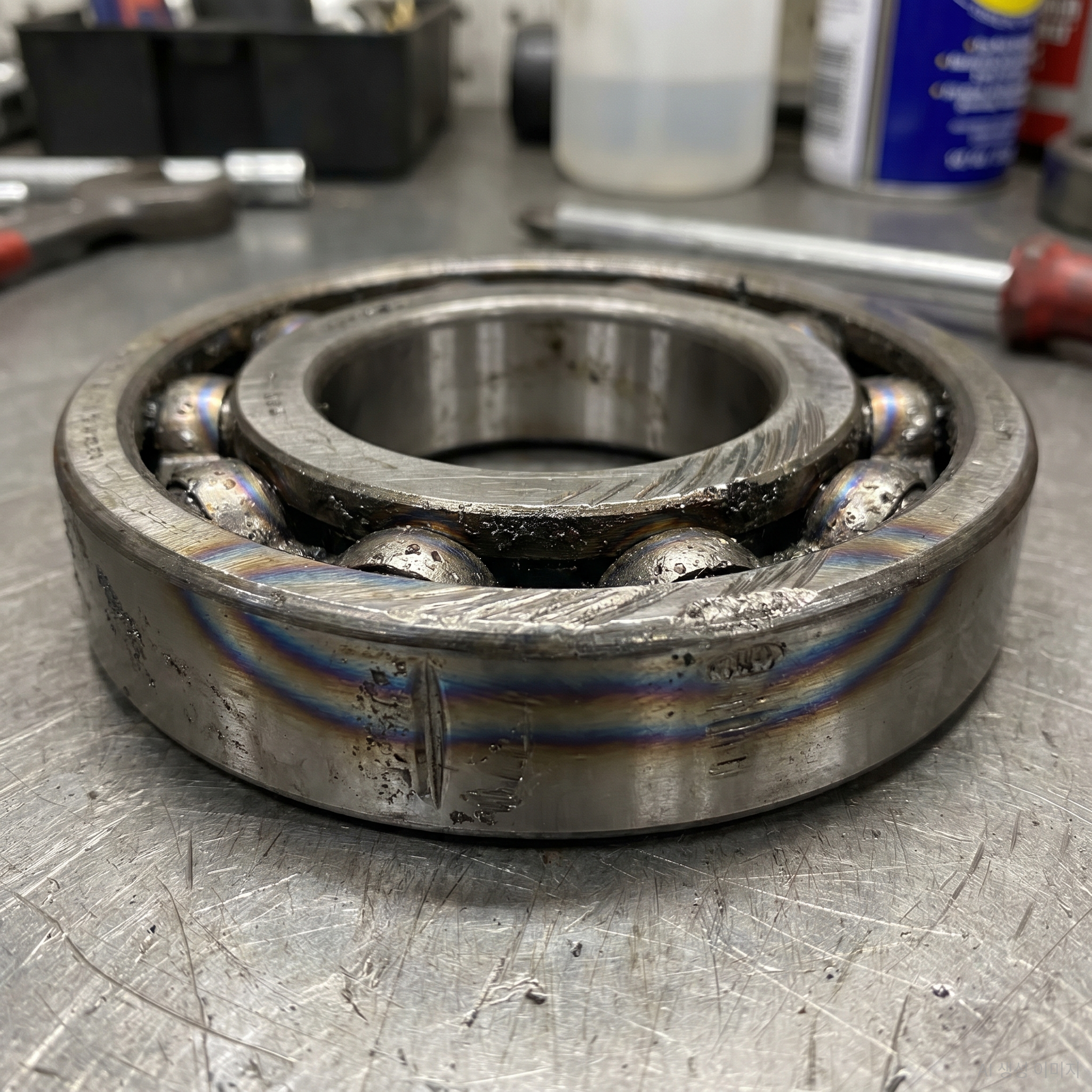
A sharp, metallic 'SCREEECH' sound: This is the classic cry for help from a failing bearing. The most likely culprit is a lack of lubrication or a complete fracture of the bearing itself. Bearings are designed to let metal parts roll smoothly against each other; when the lubrication fails, you get direct metal-on-metal grinding at high speed, which produces that ear-splitting squeal. If you ignore it, the problem escalates exponentially. The heat and friction will quickly damage the shaft the bearing is mounted on, turning a simple bearing replacement into a major, costly disassembly and shaft repair job.
A heavy, rhythmic 'THUMP, THUMP' sound: This often points to a problem inside a gearbox or with a drive chain. It could be excessive backlash—the small gap between gear teeth—which has worn down over time. Think of it like a bit of 'play' in your car's steering wheel; a tiny amount is normal, but too much results in a 'clunk' every time the gears engage. In a heavy industrial machine, that 'clunk' is a powerful impact that sends shockwaves through the system. Alternatively, it could be a loose drive chain that's slapping against its housing. This is a tell-tale sign of imminent gear wear in packaging machinery and requires immediate attention before a tooth shears off.
An irregular 'RATTLE' or 'CLATTER': This sound is often caused by something that has come loose. It could be a roller or guide on a conveyor belt that has shifted out of alignment, or, more commonly, a fastening bolt that has vibrated loose. While it might seem minor, a loose component on a machine operating at high speed can be catastrophic. The vibration can lead to metal fatigue and cracks in the machine frame, or the loose part could fall into the main mechanism, causing a complete jam. A prompt diagnosis of this conveyor belt noise is critical to prevent a sudden, complete halt in your production line.
Real-World Wins: How Precision Diagnostics Saved Our Clients a Fortune
A thousand words of explanation can't match the impact of a real story. Let me show you how a commitment to precise diagnostics, rather than a rush to replace parts, protects your hard-earned money. This is the core value of the Outsourced Maintenance System I've built my reputation on.
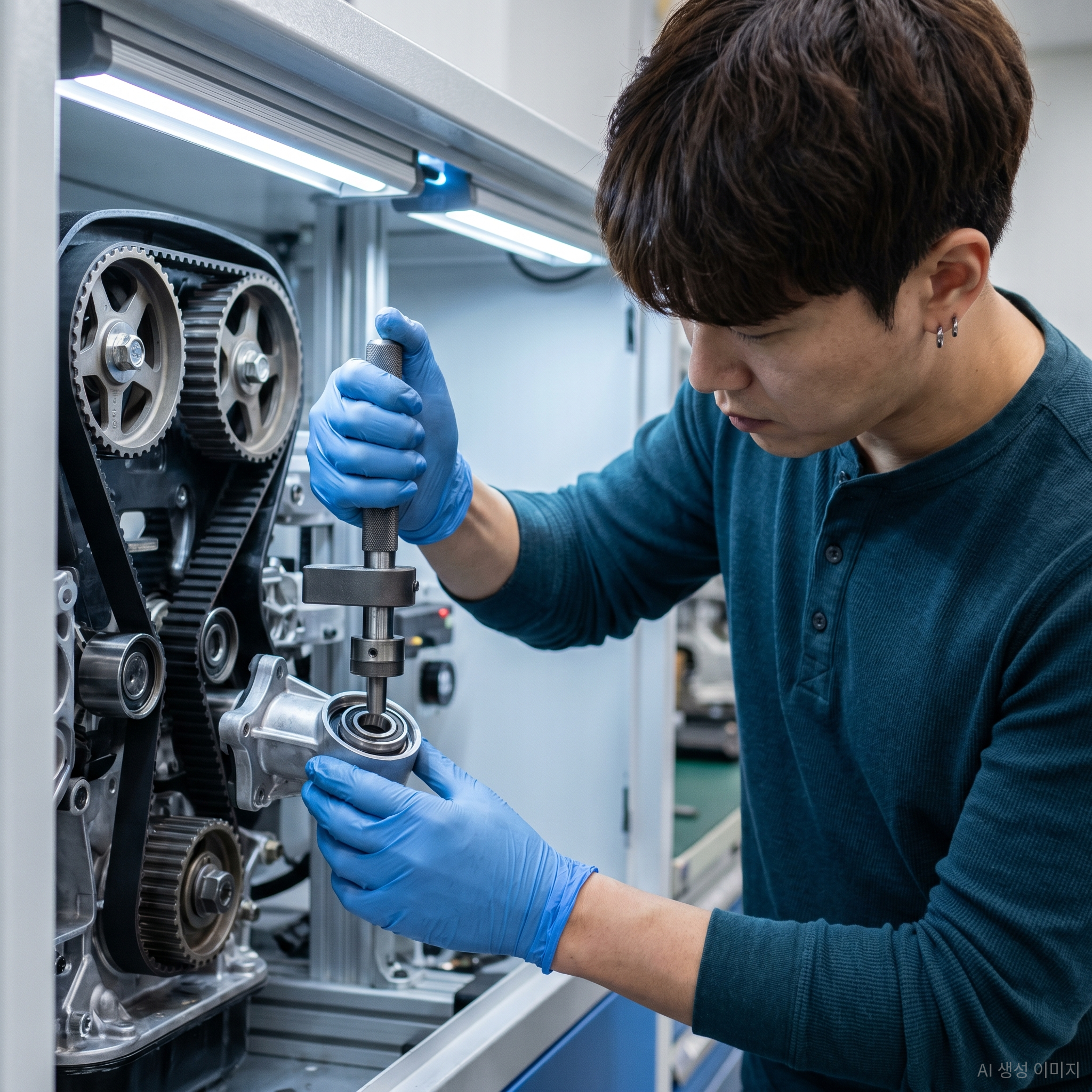
First, consider the case of a food factory in Anseong. Their three-sided packaging machine was making a jarring 'clunking' noise, and intermittently, the sealed packages would come out misaligned. The original equipment manufacturer's service team took one look and quoted them 12 million won (about $9,000 USD) for a complete replacement of the main drive assembly. The owner felt he had no choice. Before he signed the check, he called me for a second opinion. I spent two hours on-site, carefully observing the machine, listening, and isolating different parts of the drive cycle. The root cause wasn't the entire drive assembly. It was a single, worn-out bearing on the timing belt tensioner—a part that cost a mere 50,000 won ($37 USD). With the new bearing installed and the system recalibrated, the total cost of the repair came to just 200,000 won ($150 USD). We solved the problem and saved the client over $8,800.
━━━━━━━━━━━━━━━━
━━━━━━━━━━━━━━━━
Second, let's talk about a cosmetics factory in Paju. Their labeling machine was emitting a high-frequency 'whine' but only when running a specific product line. The noise was so irritating that operators were reporting headaches, and morale was plummeting. Unable to find the source, the factory manager had been forced to reduce the machine's speed, sacrificing productivity just to make the workday bearable. When I arrived, I used frequency analysis tools to pinpoint the exact source of the sound. The culprit was astonishingly small: a microscopic air leak in one of the suction-cup-like vacuum pads used to hold the product in place. Air hissing through that tiny hole created the high-pitched sound. A new vacuum pad cost 5,000 won (less than $4 USD). We replaced it, and the line was immediately back to running at full, profitable speed.
Third, a more recent case involving a factory repair in Seongnam, a major industrial hub in South Korea. The owner's concern was twofold: his factory's overall electricity bill was steadily climbing, and a low-level vibration could be felt throughout the facility. He couldn't find a single source. Instead of just looking at one machine, I conducted an energy efficiency audit. I measured the load current of each major piece of equipment and analyzed the data. The investigation revealed that an aging, inefficient air compressor was running in a constant state of overload. It was fighting itself to maintain pressure, wasting enormous amounts of electricity as heat and vibration. We performed a complete overhaul of the compressor. The results were immediate. The ambient noise level in the factory dropped significantly, and the monthly electricity bill was reduced by 12%. For any factory in 2026, this kind of energy optimization diagnosis isn't just good practice; it's essential for survival.
Top 3 Questions I Hear from Factory Managers (and My Expert Answers)
Over the years, I've heard the same concerns from hundreds of owners and managers on the factory floor. Here are the most common questions, along with my straight-to-the-point answers.
Q1. Is it always better to just replace an old machine?
A: Absolutely not. This is one of the most expensive misconceptions in the industry. A machine's age is far less important than its current productivity, its energy efficiency, and the availability of spare parts. Through a proper diagnostic process, we can often perform a targeted overhaul, replacing only the core worn-out components. This can restore a machine to 70-80% of its original performance for as little as one-third the cost of a new one. Furthermore, keeping your existing machinery means you avoid the costs and downtime associated with installation, integration, and retraining your operators. This is the foundation of smart, cost-effective preventive maintenance.
Q2. Every repair company gives me a different quote. Who should I trust?
A: You need to learn to distinguish between a 'replacement quote' and a 'diagnostic report.' A quote that simply lists a dozen parts to be replaced without a clear, data-backed explanation of the root cause should be a major red flag. It often means the technician is just guessing by replacing everything in a general area. A trustworthy report will clearly state the fundamental problem, provide the data that led to that conclusion (e.g., vibration readings, thermal imaging, oil analysis), and then offer you a set of tiered options. The best way to protect yourself is to get a second opinion from an independent equipment diagnosis expert who has no financial incentive to sell you expensive parts.
Q3. What exactly is a 'non-resident' or 'outsourced' maintenance system?
A: Think of it as having a full-time, expert maintenance team on staff, but without the associated overhead. Instead of waiting for a machine to break down and then calling for emergency help, we establish a proactive partnership. I regularly visit your facility to inspect, diagnose, and perform preventive maintenance on your critical equipment. We identify and fix small problems before they become catastrophic failures. It's a fundamental shift from reactive fire-fighting to proactive management. This model allows you to focus 100% on production and sales, confident that a dedicated technical partner is ensuring your machinery runs smoothly and efficiently.
Ignoring a small noise from a machine is like ignoring a small leak in a dam. Eventually, it will lead to a catastrophic failure, resulting in production stoppages and devastating financial losses. Listening to the voice of your machinery is the most fundamental principle of protecting your factory.
Do you have a strong technical shield ready to defend your factory against sudden breakdowns?
Stop trying to solve these complex problems alone. Contact me, Jin-ho Wang, a 25-year veteran technical director, and let's secure the health of your operation today.
#factory #maintenance #machine #diagnostics #preventive #maintenance #industrial #equipment #repair #machine #noise #analysis #cost #saving #for #factories #manufacturing #efficiency
📚 Want more perspectives on this topic? Browse related articles — curated by Google Search for authoritative external sources.


댓글
댓글 쓰기